
Inspiring and educating San Francisco South Bay and Peninsula plant enthusiasts since 1963


UPCOMING SPEAKERS & EVENTS
Join us in person or on Zoom for monthly Western Hort programs designed to inform, educate and inspire the dedicated plant lover.
Meetings are held 9 times a year (Sept-May) on the second Wednesday of the month and feature a lecture and slide presentation by a guest horticultural specialist. Each program also includes a member-led discussion and photos of unusual plants.
Meetings often include a sale of diverse plant varieties donated by members and local nurseries as well as books, seeds, tools and other horticultural items on occasion. The meetings are free for members, non-member attendees are $10. All are welcome!
Meetings are held in the Garden House at Shoup Park, 400 University Ave., Los Altos.


October 14th, 2026, 7:30pm (Zoom only)
History of Alice Eastwood
with Amy Schneider
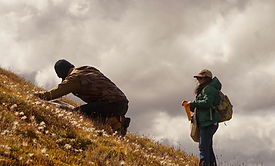
Alice Eastwood and Alfred Russel Wallace crossed paths in Denver, Colorado in May, 1887. Eastwood, then a Denver area schoolteacher and amateur botanist, took Wallace, a famous English naturalist, known for discovering the theory of natural selection, up to the top of Grays Peak Colorado that July. Their week-long trip included adventure, plant collection and a bit of adversity. As you know, Eastwood went on to become the Herbarium Director at the California Academy of Sciences, Her heroic save of the type specimen cabinet during the 1906 earthquake and fire, and her life afterward is detailed.
Amy has been working for the Horticulture Department at beautiful Denver Botanic Gardens since 2008. Currently an Assistant Curator, she loves spending her days growing plants at the three gardens she manages at DBG York Street location. Her largest garden is an hour west of Denver at Mt Goliath, a shoulder peak on the Mt Blue Sky massif, where she documents the incredible number of alpine species blooming there every summer. Amy works with the US Forest Service and Denver Mountain Parks to collect seed to grow and plant in the Alpine Interpretive Garden surrounding the Mt Goliath Nature Center at 11,500 feet in elevation. She currently is on a project to re-collect many of the species Alice Eastwood and Alfred Russel Wallace collected approximately 130 years ago in Colorado. One of her favorite summer joys is when she turns into a trailhead parking lot in the early morning and sees some of her best friends waiting so they can start hiking and working on alpine plants all day.


November 11th, 2026, 7:30pm
PLANT SELECTION IN A COMPLEX WORLD: NAVIGATING SPECIES, CULTIVARS AND EXPECTATIONS FOR THE BEST PLANTS TO USE IN YOUR GARDEN
with Dr. Benjamin Hoover
We know that selecting the right plant for a landscape is important, but how do we evaluate plants to make smart decisions? Should we only plant native plants? Are the newest cultivars always the best choice? In this session, we acknowledge the myriad stakeholders in plant selection, then talk about cultivars and plant species. The conversation involves genetic outliers and mutations, grafted plants, plant adaptations to stresses, and how they might affect aesthetic and ecological outcomes. Plants are diverse and have a lot to offer; we just need to know how to pick the right fit.
Benjamin Hoover is a Professor of Sustainable Nursery Production in the Plant Sciences Department at California Polytechnic State University (Cal Poly) in San Luis Obispo, CA. Ben started working at Behmerwald Nursery (Schwenksville, PA) as a teenager, fell in love with plants, then studied them till he had a PhD in Horticulture from Penn State. Now he enjoys helping students at Cal Poly see the art and science of horticulture, as well as myriad exciting opportunities for innovation. Ben loves being an educator and researcher because it lets him indulge his eternal curiosity. Every day is a day to learn something new!

December 9th, 2026, 6:30pm
HOLIDAY POTLUCK


January 9th, 2027, 7:30pm
GRAFTING MADE EASY: THE ART AND SCIENCE OF JOINING PLANTS
with John Hammerschmidt and Eva Huala
Many gardeners have a fruit tree or two in their gardens, but struggle with having a huge crop for a few weeks and no home-grown fruit the rest of the year. Other gardeners have trees that don't produce fruit, are disease-prone or produce fruit that they don't particularly enjoy. Grafting fruit trees can overcome these issues and is easier than most people think. This talk and live demonstration by Eva Huala and John Hammerschmidt will cover the reasons why you might want to try grafting, the best time of year, where to get supplies, and demonstrate several different grafting methods. These methods also work well on ornamental trees.
Eva Huala grew up in Santa Cruz on three acres near UCSC where her family had chickens and horses, a large vegetable garden and many fruit trees. After completing her doctorate in genetics she researched the genetic basis of plant phototropism and managed a plant genome database. Now retired, her continuing love of plants is expressed through gardening, with a special interest in growing fruit. She recently began grafting fruit trees with very good success and is eager to pass on what she has learned. She is a member of Western Hort and the California Rare Fruit Growers, and has been successful with grafting apples, pears, cherries, apricots, nectarines and peaches. Her favorite grafting method is the cleft graft.
John Hammerschmidt is currently the owner of Hammerschmidt Construction Inc., an award-winning design + build residential remodeling firm, but it all started in a garden, then farm in Fresno County at a young age. He started taking care of his vegetable garden and old vine vineyard at 6, then built a greenhouse, grafted a persimmon [theoretically very difficult], started a succulent nursery and gardening business all by 16, Then off to college for a degree in horticulture from Reedley Junior College and then Cal Poly. After college, a short career selling irrigation equipment before entering the landscaping industry. Also, a member of the Western Horticulture Society and California Rare Fruit Growers, his yard keeps him busy, growing food for all kinds of small animals and he enjoys eating what is left!


February 10th, 2027, 7:30pm
CALIFORNIA'S WILDLANDS AS PLACES TO GATHER, GARDEN AND GIVE BACK: LESSONS FROM NATURE AND NATIVE PEOPLE
with M. Kat Anderson
What does it mean to truly belong to a landscape, to listen to it, and let it sing back? In her new book, I Sing to the Earth and She Sings Back, ethnobotanist M. Kat Anderson invites us into a more intimate, embodied relationship with the natural world, one grounded in presence, reciprocity, and a reawakening of ancestral ways of knowing. She invites the audience to come with her into the field, to learn about the Old Ways of relating to nature that she has learned from many years of fieldwork with Indigenous people as well as lessons she’s learned directly from nature.
M. Kat Anderson is an ethnoecologist and gatherer dedicated to restoring relationships between people and native ecosystems. She has spent more than 25 years learning from Native American communities, integrating Traditions Ecological Knowledge (TEK) with Western Science. As the author of Tending the Wild, she highlights Indigenous stewardship practices essential for biodiversity, climate resilience, and cultural restoration. Her latest work, I Sing to the Earth and She Sings Back, explores how we all can garner a sense of belonging to place through reimagining time, embracing reciprocity, and cultivating deep, healing relationships with the earth. The earth misses us and needs us. She is calling on us to find our way back home.
March 10th, 2027, 7:30pm
Garden Photography
with Marion Brenner


April 14th, 2027, 7:30pm
EDIBLES IN THE GARDEN
with Patricia Saint John
When integrating edibles into a garden, there are so many options: from planting fruit trees (what is your favorite fruit?), to setting aside space for greens—lettuce, chard, kale, spinach (so fresh and nutritious without pesticide use) and tomatoes—growing your own can give you the very best tasting tomatoes you have ever had! Combining ornamental plants with edibles can result in a gorgeous, nutritious garden for pollinators, and you, your family and friends.
Patricia St. John has been designing residential gardens for the past 30 years on both sides of San Francisco Bay. Her work has received several design awards and has been featured in Better Homes and Gardens and Sunset Magazines, S.F. Chronicle, and seven books on garden design. She taught in the Landscape Horticulture department at Merritt College in Oakland for 10 years, and developed and then taught the Edible Landscaping class at Merritt for several years.

MAY 12th, 2027, 7:30pm
MOVIE AND VENDOR NIGHT
Movie TBA
If you enjoy these talks and want to help the Western Horticultural Society sustain our program, you might like to sponsor one of our speakers! Your donation helps cover the costs of hosting a speaker and we will note your name as sponsor in our newsletter. You can choose the month or speaker of your choice or perhaps you have a speaker you would like to propose? Contact Leslie Dean at info@westernhort.org about donations or questions.